
English| EUR
Suggested for you
More currencies
Choose a language
Bamboo rafting is a traditional form of river transport using platforms constructed from lashed bamboo poles. In Mae Wang District, this centuries-old technique allows visitors to experience how local communities historically moved people and goods along shallow waterways.
Quick answer
Bamboo rafting is a slow-drift river journey on a handmade platform constructed from bamboo poles lashed together with natural fiber or rope. The raft is steered by a local guide using a long bamboo pole to push off rocks and navigate currents. On Mae Wang River, the journey covers approximately 5 kilometers over one to two hours, following the same route villagers used for timber transport and family travel before motorized roads reached the valley.
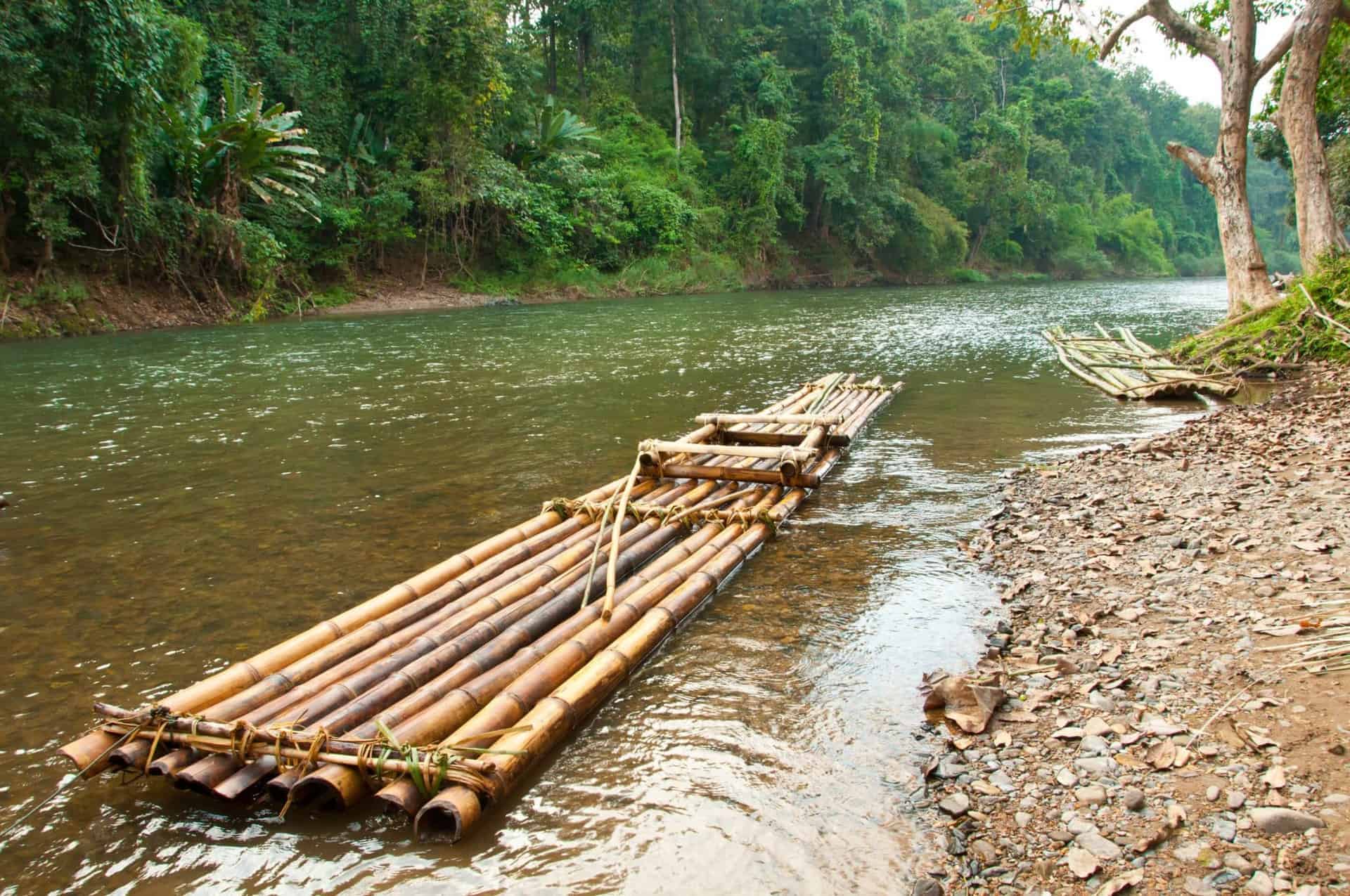
The bamboo rafts used in Mae Wang are not recreational props but working replicas of platforms that carried teak logs, rice sacks, and entire families down from mountain villages as recently as the 1980s. Each raft measures roughly three meters wide and consists of twelve to fifteen bamboo culms selected for diameter and straightness, bound in parallel with nylon cord that has replaced the original rattan lashings. The construction takes two villagers approximately three hours. What distinguishes bamboo rafting meaning from modern whitewater rafting is the absence of propulsion. The raft drifts with the current while the guide—always a resident of Mae Win or a neighboring village—uses a single bamboo pole to steer clear of submerged rocks and shallow gravel bars. The technique requires reading the river's surface: darker water indicates depth, ripples signal obstacles, and the guide's pole tests the bottom every few meters. This is river navigation as practiced before engines, relying entirely on seasonal water flow and intimate knowledge of each bend. The Mae Wang route follows a section of river that drops gently through secondary forest and terraced farmland. During the wet season, the current quickens but remains navigable; in the dry months, certain sections require passengers to walk while the guide floats the raft through shallows. The experience is tactile and unhurried—bamboo creaks, water slaps the underside of the platform, and the guide adjusts position with small shifts of weight and pole angle. For visitors, bamboo rafting offers a window into subsistence river culture: not adventure sport, but a form of transport shaped by material availability and terrain. Understanding this context shapes expectations. The journey is quiet, the pace dictated by the river rather than the guide. Participants sit cross-legged on the bamboo surface, which flexes slightly with each wave. The raft returns to its starting point by truck; the downstream drift is one-way, as it was when bamboo rafting served as the valley's primary link to lowland markets.
“The raft drifts with the current while the guide uses a single bamboo pole to steer clear of submerged rocks, relying on intimate knowledge of each bend.”
The best arrival window for bamboo rafting on the Mae Wang River is 08:00–14:00. This timeframe balances comfortable temperatures with sufficient daylight to complete the 1-2 hour journey.
Cool and dry, 20°C–28°C
Ideal conditions for daytime activity and mild temperatures throughout the rafting experience.
Hot and dry, 30°C–38°C
Arrive early in this window to avoid the peak heat of the afternoon sun.
Humid with rain, 25°C–32°C
Rafting remains possible, though river levels may fluctuate due to seasonal rainfall.
—
Visiting on weekdays provides the most tranquil experience on the river.
Verdict: For the most comfortable experience, plan your arrival between 08:00–14:00 on a weekday during the cooler months of November to February.
The bamboo rafting operations on the Mae Wang River maintain consistent daily hours throughout the week to accommodate visitors. Rafting services are available from early morning until the early evening.
The bamboo rafting area is located in Mae Win, Mae Wang District, Chiang Mai 50360, Thailand. As this is a remote destination, the most reliable approach is to arrange private transport or a rental vehicle from central Chiang Mai.
Highway 108 and Route 1013
Route 1013 via Mae Wang
Mae Wang District route
Plan your travel to arrive between 08:00 and 14:00 to avoid mid-day heat and ensure sufficient daylight for your journey.
Bamboo rafting on Mae Wang River follows a straightforward progression from meeting your guide to drifting downstream through forested sections. The journey typically takes 1-2 hours depending on water flow and chosen route length.
Arrive at the riverside station where your raft captain will greet you and provide a brief overview of the route. Many visitors assume life jackets are mandatory, but they're optional since the river remains shallow throughout most sections.
Step onto the lashed bamboo structure, which accommodates up to three passengers seated low on the deck. The raft sits only inches above the waterline, so keep bags and electronics in waterproof protection.
Your guide uses a long pole to navigate away from the bank and into the river's gentle flow. The first few minutes feel unstable as the raft settles into motion, but the wide base prevents tipping.
The river carries you past overhanging vegetation and smooth boulders while your guide steers around shallow sections. Expect occasional scraping sounds as the bamboo底 drags over rocks in low-water areas.
The guide poles through faster-moving sections where the channel narrows, sometimes requiring passengers to shift weight for balance. These brief surges are the most dynamic moments of an otherwise calm drift.
The raft glides into a designated pull-out zone where you step off onto the riverbank. Transportation back to the starting point is typically arranged separately, so confirm your return method beforehand.
Bamboo rafting on the Mae Wang River depends on respect for the natural environment and mindful conduct on the water. Following these practices ensures a safe journey and preserves the river ecosystem for future visitors.
Everything you need to know about bamboo rafting meaning
The bamboo rafting meaning refers to the historical method of transporting timber downstream on simple, hand-lashed poles. Today, this tradition has evolved into a popular recreational activity where visitors sit on these rafts to navigate the gentle river currents. It represents a deep connection to the local ecosystem and rural Thai heritage. This authentic experience allows travelers to observe the riparian forest at a relaxed pace while supporting the local community. Visitors often seek this experience as part of their broader Chiang Mai landmark explorations. Local operators provide these traditional crafts, which act as a local-language form of sustainable river transport. The experience is essentially a guided float trip down the waterway using skilled pole-men who maneuver through the shallow sections. The entrance fee is 600 THB, which covers the cost per bamboo raft. Each raft can accommodate up to 3 people for the journey. The facility is open daily from 06:00 to 18:00, providing ample time for visitors. Families are welcome to join, though life jackets should be worn for safety during the 1-2 hour trip. To avoid mid-day heat and ensure enough daylight for your rafting journey, aim to arrive between 08:00 and 14:00.
Chiang Mai Bamboo Rafting Tours
Read more GuideBamboo Rafting Chiang Mai Prices
Read more GuideBamboo Rafting in Mae Wang
Read more GuideChiang Mai Bamboo Rafting Reviews
Read more Tickets & toursElephant and Bamboo Rafting Tours
Read more Tickets & toursHalf Day Bamboo Rafting Tours
Read more